
Swelling is one of the most common concerns patients have in the days following a hair transplant. The puffiness around the forehead and eyes that tends to appear on days three to four can be especially alarming. It is, however, a completely normal part of the healing process and one that resolves on its own within a week for the majority of patients.
At Dr Malay Mehta’s Hair Transplant Clinic in Mumbai, we specialise in advanced FUE techniques, including Sapphire FUE, and patient education is a core part of the care we provide. Dr Mehta focuses on ensuring every patient has a clear understanding of what’s involved in the recovery process and what to expect.
In this latest blog post, we’ll explain why swelling occurs after a hair transplant, share practical tips to reduce it faster and answer some of the most frequently asked questions.
Is Swelling Normal After a Hair Transplant?
Yes, swelling is a completely normal and expected part of the recovery process. It occurs due to the fluid injected into the scalp during surgery, combined with the body’s natural inflammatory response to the procedure.
Rather than a sign that something has gone wrong, swelling indicates that the body is actively healing. It is one of the most commonly reported post-operative experiences among hair transplant patients and, in the vast majority of cases, resolves on its own within a few days without any medical intervention.
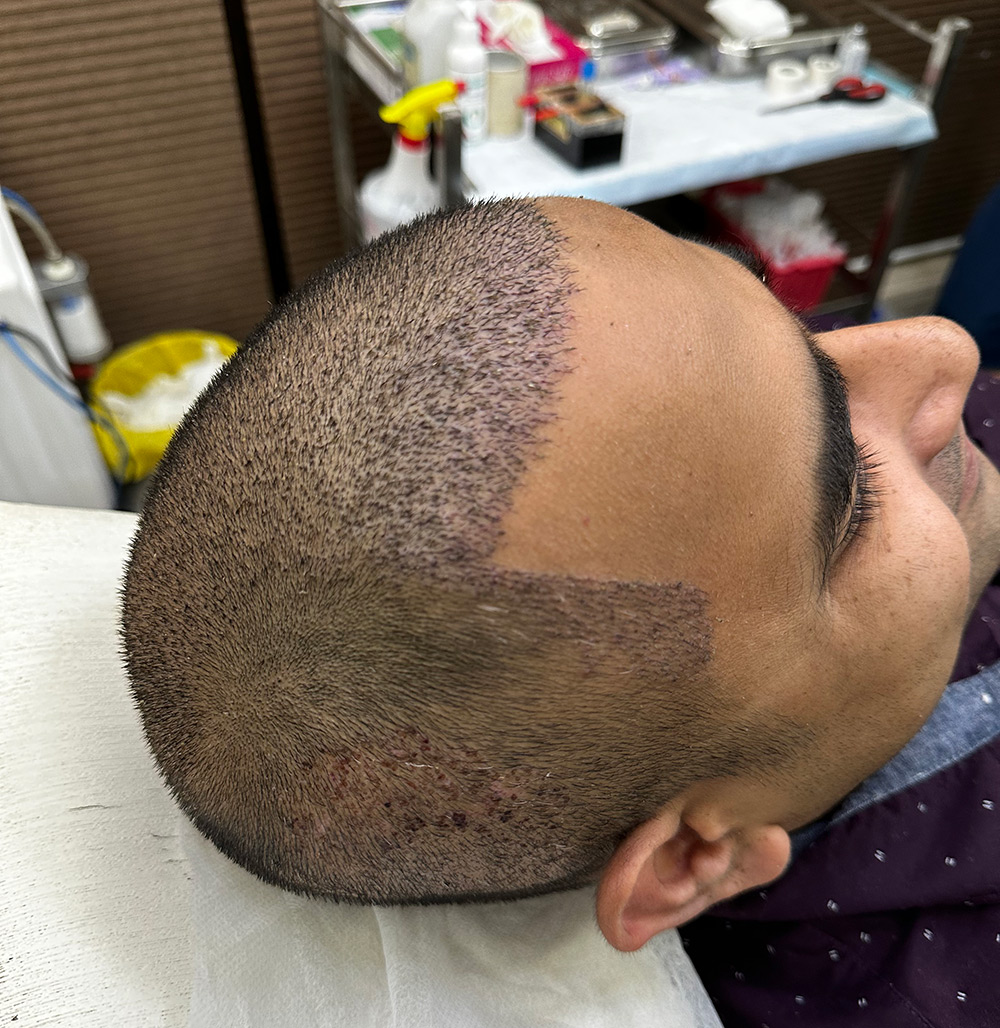
Swelling typically starts 24 to 48 hours after a hair transplant.
When Does Swelling Start After a Hair Transplant?
Swelling typically begins within 24 to 48 hours of surgery. For most patients, the scalp is the first area affected, with fluid gradually migrating downward due to gravity over the following days.
By days 2 to 4, swelling usually spreads from the scalp to the forehead and, in some cases, to the area around the eyes. The timing and extent of swelling vary between patients and are dependent on factors such as the number of grafts transplanted and the volume of fluid used during the procedure.
Why Does a Hair Transplant Cause Swelling?
Swelling after a hair transplant occurs for several reasons. These include:
Surgical Trauma and Fluid Injection
The tumescent fluid injected into the scalp during surgery to numb the area and protect follicles during extraction contains a significant volume of saline. This fluid disperses through the tissue in the days following surgery, contributing to visible swelling.
The Body’s Healing Response
Surgery triggers a natural inflammatory response as the body works to repair the treated tissue. This inflammation causes localised fluid retention, resulting in swelling at and around the surgical sites.
The Effect of Gravity
The scalp sits at the top of the head, and fluid naturally moves downward over time. This is why swelling that begins at the scalp on day one or two often appears at the forehead and around the eyes by days three to four. Keeping the head elevated slows this migration and reduces the extent of visible swelling in the lower face.

Some tips to reduce swelling after a hair transplant include staying hydrated and keeping your head elevated at a 45-degree angle.
Tips to Reduce Swelling After a Hair Transplant
The following steps are the most effective ways to manage swelling during recovery and encourage it to resolve as quickly as possible.
Keep Your Head Elevated
Keeping your head elevated is the best way to manage swelling in the first few days. Sleep on your back with your head and upper body propped up at a 45-degree angle using pillows or a recliner chair. This position reduces fluid accumulation at the surgical site and slows the progression of swelling toward the forehead and eyes. Dr Mehta recommends maintaining this position for at least the first three to four nights.
Stay Hydrated
Adequate hydration supports the body’s ability to process and eliminate excess fluid. Drinking plenty of water in the days following surgery helps the lymphatic system function efficiently and can contribute to a faster reduction in swelling.
Take Prescribed Medications
Your surgeon may prescribe anti-inflammatory medications or corticosteroids to help manage swelling, particularly if a larger number of grafts were transplanted. Do not discontinue the course early, even if swelling appears to be improving. If you have any questions about your medications, Dr Mehta and his team are available to answer them.
Avoid Alcohol and Smoking
Alcohol causes blood vessels to dilate, which can increase fluid retention and make swelling worse. Smoking, on the other hand, impairs circulation and also slows down the healing process. Both should be avoided for at least the first week following surgery and ideally longer, to give your body the best possible chance of a smooth recovery.
Limit Physical Activity
Strenuous exercise increases blood flow and raises blood pressure, both of which can intensify swelling and increase the risk of complications in the early stages of recovery. Light walking is generally acceptable after the first few days, but avoid anything more demanding, including gym sessions, running or heavy lifting, for at least the first two weeks. Follow your surgeon’s specific guidance on when it is safe to return to exercise.
Avoid Heat and Sun Exposure
Heat can cause blood vessels to expand, worsening swelling and irritating the healing scalp. Avoid hot showers, saunas, steam rooms and direct sun exposure for at least the first two weeks following surgery. When outdoors, keep the scalp protected and follow Dr Mehta’s guidance on when sunscreen can be safely applied to the treated area.
Follow Post-Operative Instructions Carefully
The most effective way to reduce swelling and support a smooth recovery is to follow your surgeon’s post-operative instructions precisely. These instructions are tailored to your specific procedure and will cover aspects such as sleeping position, medications, activity restrictions and follow-up appointments.
When to Be Concerned About Swelling
Although swelling is expected, you should contact your doctor if you experience any of the following symptoms:
Swelling That Persists Beyond 7-10 Days
It’s normal to have some degree of swelling, which should resolve by the end of the first week. If swelling persists beyond 7 to 10 days without improvement, it’s best to reach out to your doctor for further advice.
Increasing Pain or Tenderness
Mild discomfort is normal in the first few days, but pain that worsens rather than improves over time is not typical and should be evaluated promptly.
Redness, Warmth or Discharge
These can be signs of infection, which, while uncommon, require prompt medical attention. If the swelling is accompanied by increased redness, warmth in the area, or any discharge from the scalp, contact your doctor right away.
Considering a Hair Transplant? Here’s How Dr Malay Mehta Can Help
If you’re considering a hair transplant, choose a surgeon who clearly explains what to expect during recovery, because aftercare is just as important as the procedure itself. At Dr Malay Mehta’s Hair Transplant Clinic in Mumbai, Dr Mehta and his team support you at every stage, from your initial consultation through to recovery.
Our suite of treatment options includes:
FUE Hair Transplant
A precise, minimally invasive technique that carefully extracts and relocates healthy follicles into areas of thinning or loss. As no linear incision is made, post-operative swelling and downtime are typically minimal compared to older strip methods.
Biofibre Hair Implants
For patients with insufficient donor hair, Biofibre implants use biocompatible synthetic fibres to deliver immediate improvements in volume and coverage, offering a viable option when a conventional transplant may not be suitable.
ARTAS Robotic Hair Transplant
The ARTAS system uses AI algorithms and a high-definition stereoscopic vision system to identify, select and extract the most viable follicles with robotic precision. Its minimally invasive approach means less trauma to the scalp, which can contribute to a more manageable recovery with reduced swelling.
Mesotherapy
A targeted, non-surgical treatment that introduces vitamins and growth factors directly into the scalp, nourishing follicles and supporting scalp health. It can also be used as part of a post-operative plan to aid recovery and reduce inflammation following a transplant procedure.
Other Hair Loss Treatments
Dr Mehta’s clinic also offers advanced solutions such as Growth Factor Concentrate Therapy, Low-Level Laser Therapy (LLLT) and scalp micropigmentation (SMP). Each of these treatments can be used independently or as part of a broader plan to improve density, encourage growth and support long-term scalp health.
How to contact us
Phone: +91 7045291747
Another Phone: +91 8758691345
Email Us: drmalaymehta@gmail.com
6th Floor, Cosmos Court,
Vile Parle West Mumbai – 400056
Maharashtra, India
FAQs
How to stop swelling after a hair transplant?
Swelling can’t be completely avoided, as it’s a natural part of healing, but it can be managed effectively. Keeping your head elevated, staying well hydrated, taking prescribed medications and avoiding alcohol, heat and strenuous activity during the first week are some of the most effective ways to reduce swelling quickly.
How long after a hair transplant does swelling go away?
For most patients, swelling begins to reduce from around day five and is largely resolved by days six to seven. In some cases, particularly when a larger number of grafts are transplanted, it may take up to 10 days for the swelling to go away. If you are not seeing visible improvement by this point, it is worth contacting your clinic to have it assessed.
Why does a hair transplant cause so much swelling?
Swelling occurs due to the volume of tumescent fluid injected into the scalp during surgery, combined with the body’s natural inflammatory response to the procedure. As gravity pulls this fluid downward over the following days, it moves towards the forehead and eye area, making swelling appear more noticeable there than at the transplant site itself.
Does ice reduce swelling after a hair transplant?
Ice can help reduce swelling when applied correctly. It should only ever be placed on the forehead, never directly on the grafts or recipient area and applied in short intervals of ten to fifteen minutes at a time using a cloth-wrapped compress. Always check with your surgeon before using ice as part of your recovery routine.

About The Author
Dr Malay Mehta
Dr Malay Mehta is passionate about offering men the confidence the've always wanted by performing hair transplants with outstanding hair density and natural looking results. He is known as the best hair transplant surgeon in Mumbai delivering amazing results at the most affordable prices in the area.
Most Popular Posts

15 January 2023

5 January 2024

15 February 2023
What is the Cost and Success of PRP Hair Treatment in India?
21 December 2023








 Online Marketing For Doctors

Comments