
Both DHI and FUE are advanced hair transplant techniques that can deliver natural, long-lasting results, but they work differently and understanding those differences is important when deciding which approach is right for you.
The distinction comes down mainly to how grafts are implanted. FUE involves extracting follicles and placing them into pre-made channels in the scalp, while DHI uses a specialised pen to implant grafts directly, without the need to create channels. Each method has its strengths, and the best choice depends on your hair loss pattern, your density goals and your surgeon’s recommendation.
At Dr. Malay Mehta’s Hair Transplant Clinic in Mumbai, we specialise in advanced FUE techniques, including Sapphire FUE, tailoring our approach to each patient’s individual needs. In this article, we’ll walk you through how FUE and DHI differ, which produces better results and how to determine which is the right fit for you.
What is FUE?
Follicular Unit Extraction (FUE) is one of the most widely used hair transplant procedures available today. It is a minimally invasive procedure that involves three key stages:
- Extraction: Individual follicular units are removed one by one from the donor area using a small, circular punch tool.
- Channel creation: Tiny incisions are made in the recipient area to receive the grafts.
- Implantation: Extracted grafts are carefully placed into the prepared channels.
FUE leaves no linear scar, making it a popular choice for patients who prefer a shorter hairstyle. It is well-suited to larger treatment areas and higher graft numbers and is one of the most extensively researched techniques in hair restoration.
What is a DHI Hair Transplant?
Direct Hair Implantation (DHI) is an evolution of the FUE technique that modifies the implantation stage using a specialised device known as a Choi implanter pen. Rather than creating channels in advance and then placing grafts separately, the Choi pen allows the surgeon to extract and implant follicles in a single, continuous motion.
- No pre-made channels are required, reducing the time grafts spend outside the body
- The Choi pen offers greater control over the angle, depth and direction of each implanted follicle
- The process allows for denser packing in targeted areas, making it particularly effective for hairline work and focused density improvements
FUE vs DHI: Key Differences
| Features | FUE | DHI |
|---|---|---|
| Implantation method | Pre-made channels | Direct via Choi pen |
| Precision | High | Very high |
| Shaving required | Usually yes | Sometimes |
| Procedure time | Faster | Slower |
| Density control | Good | Excellent |
| Cost | Lower | Higher |
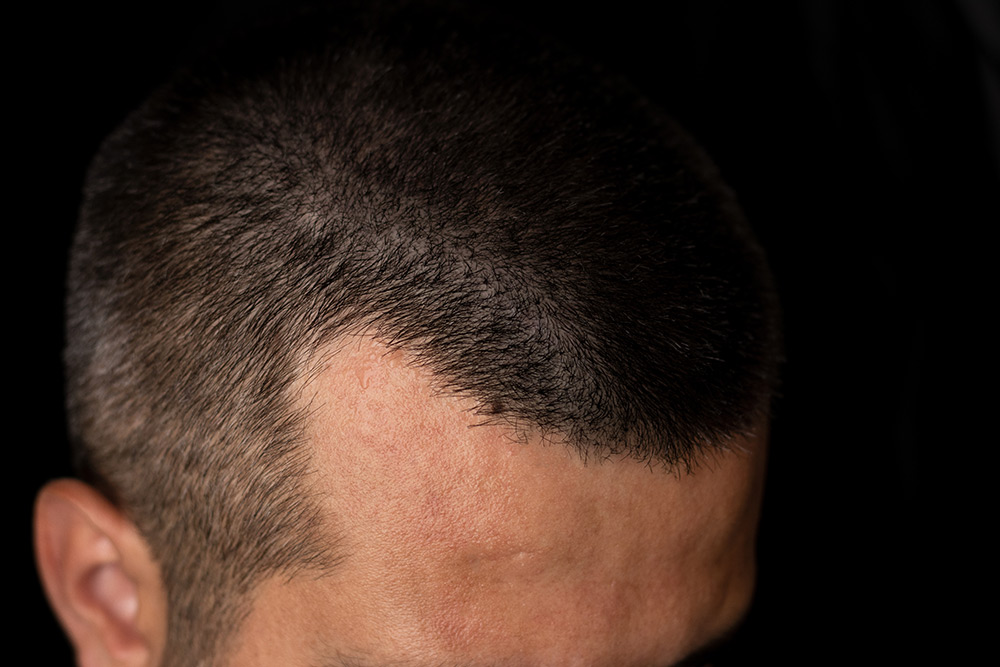
Neither technique is better than the other, as it depends on factors such as individual goals and the extent of your hair loss.
FUE vs DHI: Which is Better?
Neither technique is better than the other. The right choice depends on your individual goals, the extent of your hair loss and your surgeon’s recommendation following a thorough assessment.
Choose FUE If:
You have a larger balding area requiring broad coverage, need a higher number of grafts in a single session, or are working within a tighter budget. It’s also a solid choice for patients who prefer a well-established, widely available technique with a long track record of proven results.
Choose DHI If:
DHI tends to be the better option if hairline precision and definition are your primary focus, or if you’re looking to achieve denser packing in a specific area rather than broad scalp coverage. It’s also a consideration for patients who prefer to avoid a full shave or whose hair loss is concentrated in a smaller, more defined area.
FUE vs DHI Results
When performed correctly by an experienced surgeon, both techniques produce natural-looking, long-lasting results. The differences in outcome are subtle rather than dramatic and largely relate to the goals of the procedure.
- Hairline naturalness: DHI offers a slight edge due to the precise angle and direction control the Choi pen provides.
- Density appearance: DHI can achieve slightly denser packing in targeted zones, though skilled FUE placement can also produce excellent density results.
- Growth timeline: Both techniques follow the same general growth cycle, with full results typically visible at 9 to 12 months.

DHI has a technical advantage in achieving higher hair density; however, the FUE technique is also capable of achieving excellent hair density.
Which Technique Gives Better Density?
DHI has a technical advantage when it comes to dense packing, particularly in smaller areas. The direct implantation method allows grafts to be placed very close together with consistent angulation, which contributes to a fuller appearance.
That said, FUE, in the hands of a skilled surgeon, is entirely capable of achieving excellent density, particularly across larger treatment zones where efficiency and coverage are the priorities. Advanced variations, such as Sapphire FUE (which is used at Dr. Malay Mehta’s clinic), which uses a sapphire-tipped blade for channel creation, further improves the precision and density outcomes achievable with the FUE technique.
Recovery and Healing: DHI vs FUE
Recovery timelines are broadly similar for both procedures, with most patients returning to normal activity within 7 to 10 days.
| Factor | FUE | DHI |
|---|---|---|
| Downtime | Short | Short |
| Scabbing | Moderate | Slightly less |
| Healing speed | Fast | Fast |
| Return to work | 5-7 days (typical) | 5-7 days (typical) |
Cost Comparison: FUE vs DHI
DHI is typically the more expensive of the two techniques. This reflects the additional time required, the cost of Choi implanter pens (which are single-use) and the higher level of precision and expertise the procedure demands.
For patients focused on broad coverage and working within a budget, FUE offers excellent value. For those prioritising density and hairline detail in a targeted area, the additional cost of DHI may be worth considering.
Can You Combine DHI and FUE?
Yes, and for some patients, a hybrid approach is the most effective strategy. A combined procedure might use FUE to cover larger balding areas efficiently, while DHI is applied to the hairline or other zones where precision and density are the priority.
This approach requires careful planning to ensure donor hair is allocated appropriately across both techniques and is best suited to patients with sufficient donor supply to support a more complex procedure.
Ready to Explore Your Options? Here’s How Dr. Malay Mehta Can Help
At Dr. Malay Mehta’s Hair Transplant Clinic in Mumbai, FUE is our primary hair transplant technique, and it’s one we’ve refined to deliver consistently natural, long-lasting results.
Our suite of treatment options includes:
FUE Hair Transplant
A precise, minimally invasive technique that carefully extracts and relocates healthy follicles into areas of thinning or loss, producing natural-looking density without scarring.
Biofibre Hair Implants
Designed for patients with insufficient donor hair, this treatment uses biocompatible synthetic fibres to create an immediate improvement in volume and coverage.
ARTAS Robotic Hair Transplant
An advanced, AI-guided system that enhances the accuracy of follicle extraction and placement, ensuring consistent results and minimal disruption to surrounding hair.
Mesotherapy
A targeted, non-surgical treatment that introduces vitamins and growth factors directly into the scalp, nourishing follicles and creating a healthier environment for hair growth.
Other Hair Loss Treatments
Dr. Mehta’s clinic also offers advanced solutions such as Growth Factor Concentrate Therapy, Low-Level Laser Therapy (LLLT) and scalp micropigmentation (SMP). Each of these treatments can be used independently or as part of a broader plan to improve density, encourage growth and support long-term scalp health.
How to contact us
Phone: +91 7045291747
Another Phone: +91 8758691345
Email Us: drmalaymehta@gmail.com
6th Floor, Cosmos Court,
Vile Parle West Mumbai – 400056
Maharashtra, India
FAQs
Is FUE better than DHI?
Neither technique is universally better; the right choice depends on your individual goals, the extent of your hair loss and your surgeon’s recommendation. FUE is generally better suited to larger areas requiring broad coverage, while DHI offers advantages in precision and density for more targeted zones.
Are the results of FUE and DHI the same?
Both techniques can produce natural-looking, long-lasting results when performed by an experienced surgeon. The differences are subtle as DHI offers slightly more control over graft angle and direction, which can benefit hairline refinement, while FUE delivers excellent coverage across larger areas.
Is FUE or DHI more suitable for large bald areas?
FUE is the stronger choice for larger balding areas. It allows faster extraction and implantation of a higher number of grafts in a single session, making it more efficient when broad coverage is the priority. DHI is better suited to smaller, more defined zones where density and precision take precedence over volume.
Do FUE and DHI use the same donor hair extraction method?
Yes, both techniques extract follicles from the donor area using the same FUE extraction method, removing individual follicular units one by one with a small punch tool. The key difference between the two lies in the implantation stage, not extraction. FUE places grafts into pre-made channels, while DHI uses a Choi implanter pen to place grafts directly into the scalp.
Is the recovery time different between FUE and DHI?
Recovery timelines are broadly similar for both procedures, with most patients returning to normal daily activity within 7 to 10 days. DHI may involve slightly less scabbing in the recipient area due to the absence of pre-made channels, though the difference is minor for most patients. Both techniques require the same general post-operative care, including protecting the scalp and avoiding strenuous activity during early recovery.
Is shaving required for both FUE and DHI?
FUE typically requires a full shave of the donor area to allow accurate extraction. DHI can sometimes be performed with only partial shaving, which is one reason some patients, particularly those with longer hair, prefer it. That said, shaving requirements vary depending on the size of the procedure and your surgeon’s approach, so it’s worth discussing this during your consultation.
How long does FUE vs DHI surgery take?
FUE is generally the faster of the two procedures, with a typical session lasting 4 to 8 hours, depending on the number of grafts transplanted. DHI takes longer because the implantation process requires more precision and is performed graft by graft using the Choi pen.
Can FUE and DHI be combined?
Yes, a hybrid approach is possible and can be highly effective for the right patient. FUE is typically used to cover larger balding areas efficiently, while DHI is applied to zones where precision and density are the priority, such as the hairline. This combined strategy requires careful planning to ensure donor hair is allocated appropriately across both techniques.
Who is a good candidate for FUE vs DHI?
FUE is well-suited to patients with moderate to advanced hair loss across a broad area, those requiring a high number of grafts in a single session, or anyone looking for a more affordable option. DHI tends to be a better fit for patients focused on a specific area, such as the hairline or crown, those with mild to moderate hair loss, or those who prefer to minimise shaving. In both cases, sufficient donor hair availability and good overall scalp health are essential for candidacy.

About The Author
Dr Malay Mehta
Dr Malay Mehta is passionate about offering men the confidence the've always wanted by performing hair transplants with outstanding hair density and natural looking results. He is known as the best hair transplant surgeon in Mumbai delivering amazing results at the most affordable prices in the area.
Most Popular Posts

15 January 2023

5 January 2024

15 February 2023
What is the Cost and Success of PRP Hair Treatment in India?

21 December 2023






 Online Marketing For Doctors

Comments