
Scars can be difficult to conceal, especially when they appear in areas where hair would naturally grow. Whether caused by an injury, surgery, burns, or a previous hair transplant, scar tissue can disrupt the natural hairline, leaving noticeable bald patches. If you’ve been living with a scalp scar, you may have wondered whether restoring hair in the affected area is possible.
The encouraging news is that hair transplantation into scar tissue is not only possible, but has become a well-established treatment for suitable candidates. By carefully transplanting healthy hair follicles into the scar, it is often possible to improve coverage, reduce its visibility and restore a more natural appearance.
However, because scar tissue differs significantly from healthy scalp tissue in terms of blood supply, texture and healing characteristics, careful assessment and planning are essential to achieve the best possible outcome.
Does a Hair Transplant Work on Scars?
Yes, a hair transplant can be an effective way to restore hair growth in scar tissue. By transplanting healthy hair follicles into the affected area, the procedure can help reduce the visibility of the scar, improve hair density and create a more seamless transition with the surrounding scalp.
However, transplanting hair into scar tissue is more complex than transplanting into a healthy scalp. Scar tissue is typically denser, less elastic and has a reduced blood supply, all of which can affect how well transplanted follicles establish themselves and grow. As a result, graft survival rates in scar tissue are often lower than those achieved in unaffected areas of the scalp.
For this reason, successful scar hair transplantation requires careful patient selection, meticulous surgical planning and an experienced hair restoration surgeon. Factors such as the scar’s size, location, age, thickness and underlying blood supply all influence the likelihood of a successful outcome. With the right approach, many patients achieve significant cosmetic improvement and a more natural-looking result.
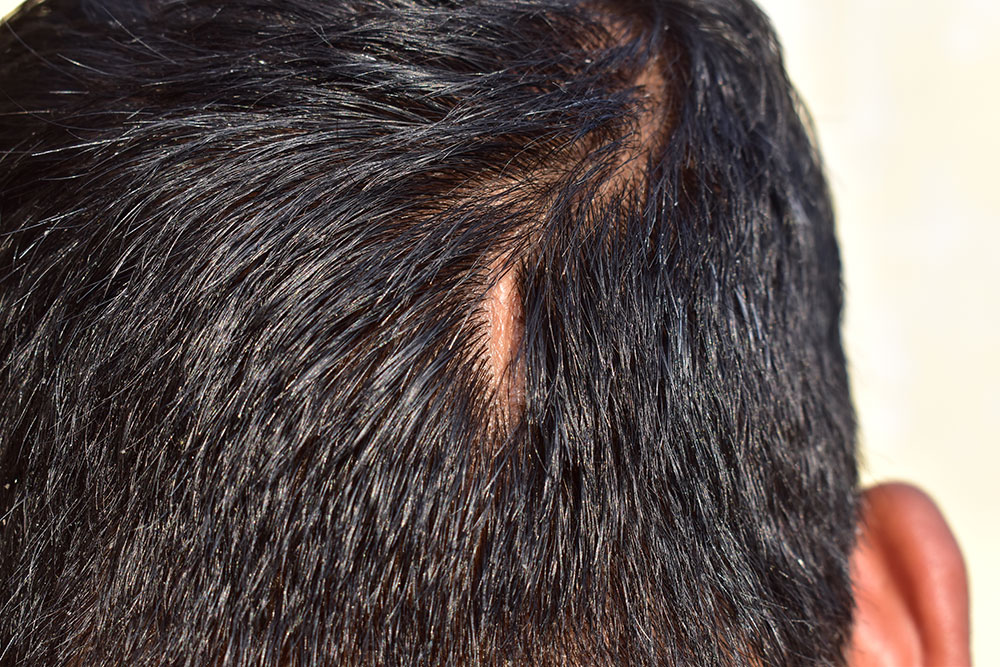
A hair transplant can help conceal surgical scars, traumatic scars, burn scars and scars from previous medical procedures or conditions.
What Types of Scars Can a Hair Transplant Conceal?
Hair transplants can be used to conceal a wide range of scalp scars, provided the affected area has sufficient blood supply to support healthy hair growth. During your consultation, Dr Mehta will assess the characteristics of the scar and determine whether you’re a suitable candidate for treatment.
Common types of scars that may be treated with a hair transplant include:
- Surgical scars: These include scars left by procedures such as facelifts, neurosurgery, or a strip-harvest (FUT) from a previous hair transplant. Linear FUT scars are among the most common reasons patients seek hair restoration for scars.
- Traumatic scars: Scars from accidents, cuts, lacerations, or other scalp injuries can often be successfully concealed with strategically placed hair grafts.
- Burn scars: Burn injuries may present additional challenges due to thinner tissue and reduced blood circulation. However, many burn scars can still be treated successfully following a thorough assessment.
- Scars from previous medical procedures or skin conditions: Some dermatological conditions, surgical procedures, or infections can leave permanent areas of hair loss that may be suitable for hair transplantation once the underlying condition has stabilised.
How the Hair Transplantation Procedure Works
A hair transplant for scars works by relocating healthy hair follicles from a donor area (typically the back or sides of the scalp) to the scarred region where hair no longer grows. Once transplanted, these follicles establish a new blood supply and begin producing hair naturally in their new location. As the hair grows, it helps soften the appearance of the scar and creates a more seamless blend with the surrounding hair.
Precision Hair Transplant Techniques
At Malay Mehta Aesthetic Clinic, scar hair restoration is typically performed using Sapphire FUE (Follicular Unit Extraction). This advanced technique enables individual hair follicles to be harvested and implanted with exceptional precision, ensuring each graft is carefully positioned at the correct angle, direction and depth. The result is natural-looking hair growth that blends seamlessly with the surrounding scalp.
For suitable patients, BIO-FUE may also be recommended. This technique uses regenerative growth factors derived from your own blood to support healing, improve the graft environment and encourage healthy hair growth after the procedure.
What to Expect During Recovery and Results
Recovery after a hair transplant for scars is similar to that of a standard hair transplant, although healing can vary depending on the characteristics of the scar tissue. As scar tissue often has a reduced blood supply, following Dr Mehta’s aftercare instructions is especially important to give the transplanted grafts the best chance of survival and growth.
The First Few Days
In the days following your procedure, it’s normal to experience:
- Mild redness around the transplanted area
- Slight swelling of the scalp
- Tiny scabs forming around each implanted follicle
- These side effects are temporary and typically resolve within the first week. Dr Mehta will provide detailed aftercare instructions, including how to wash your scalp, protect the grafts and support the healing process.
The Next Few Weeks
Within the first few weeks, the transplanted hairs will usually shed. Although this can be concerning, it’s a normal part of the hair growth cycle and does not mean the transplant has failed. The transplanted follicles remain securely beneath the skin and gradually enter a new growth phase. New hair typically begins to appear after three to four months, with continued improvement over the following months.
When Will I See the Final Results?
Hair growth after a scar transplant takes time. Most patients notice visible improvement between three and six months, while the final result is usually seen after 12 to 18 months. The exact timeline varies depending on individual healing, graft survival and the quality of the scar tissue. As the transplanted hair matures, it reduces the visibility of the scar, improves hair density and creates a more natural-looking appearance.
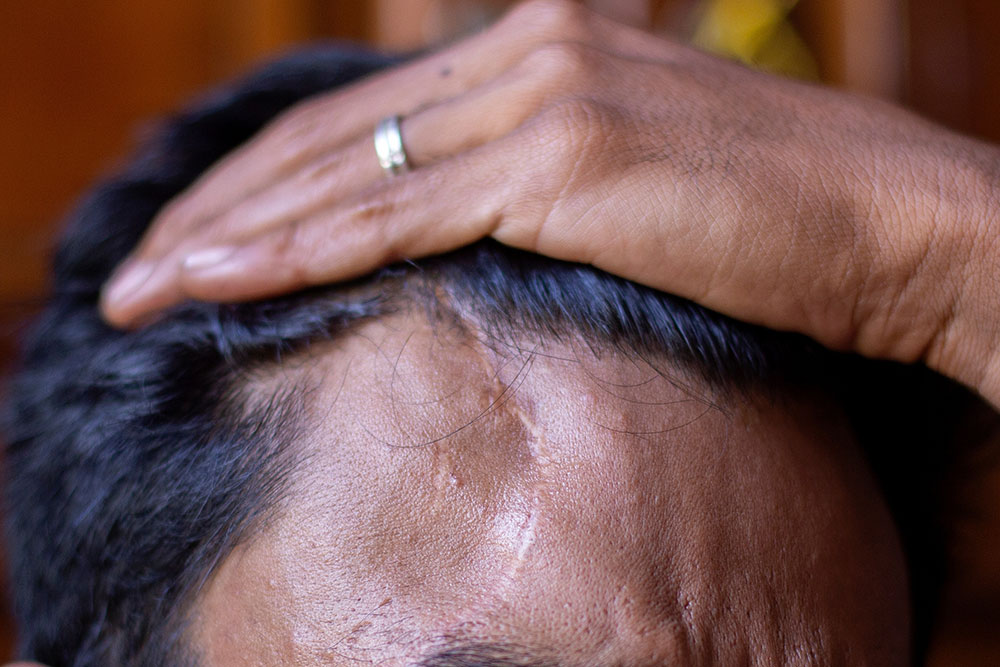
Every scar is different, making an individual assessment an important part of treatment planning.
What Affects the Success of a Hair Transplant for Scarred Areas?
Several factors influence the success of a hair transplant on scar tissue. One of the most important is the blood supply within and around the scar, as transplanted hair follicles rely on healthy circulation to survive and establish new growth. Scar thickness, flexibility and maturity also play a role, with tighter or thinner scars often presenting a greater challenge.
Other factors that can affect the outcome include the size and location of the scar, the quality and availability of your donor hair and your overall health and healing capacity. During your consultation, Dr Mehta will carefully assess each of these factors before recommending treatment.
A Staged Approach May Be Recommended
In some cases, the best results are achieved by performing the procedure in stages. Rather than transplanting a large number of grafts at once, Dr Mehta may recommend an initial session using a smaller number of follicles to assess how well the scar tissue supports graft survival. If the transplanted follicles establish successfully, a second procedure can then be performed to increase density and further improve coverage.
This staged approach helps maximise graft survival and allows treatment to be tailored to the unique characteristics of your scar, resulting in a more predictable, natural-looking outcome.
Explore Your Hair Transplant Options for Scarred Areas at Dr Malay Mehta’s Clinic
Every successful hair transplant for scarred areas begins with a comprehensive assessment.
At Dr Malay Mehta’s clinic in Mumbai, every consultation is tailored to your individual needs. Dr Mehta will assess the type, size and characteristics of your scar, as well as the quality of your donor hair, before recommending the most suitable treatment approach. Whether you’re looking to conceal a scar from surgery, injury, burns, or a previous hair transplant, you’ll receive an honest assessment and a personalised treatment plan based on your goals and suitability.
How to contact us
Phone: +91 7045291747
Another Phone: +91 8758691345
Email Us: drmalaymehta@gmail.com
6th Floor, Cosmos Court,
Vile Parle West Mumbai – 400056
Maharashtra, India
FAQs
Can I get a hair transplant on a scar?
In many cases, yes. Hair transplants can be performed on scars caused by surgery, injury, burns, or a previous hair transplant. However, scar tissue differs from healthy scalp tissue, so suitability depends on factors such as the scar’s blood supply, thickness, flexibility and overall condition. A consultation with an experienced hair transplant surgeon, such as Dr Mehta, is the best way to determine whether you’re a suitable candidate.
Can you regrow hair over a scar?
Hair does not naturally regrow from within scar tissue because the original hair follicles have been permanently damaged or destroyed. A hair transplant works by relocating healthy follicles from another part of the scalp into the scarred area. Once these follicles establish a blood supply, they can produce new hair, helping to conceal the scar and restore a more natural appearance.
Who is a good candidate for a hair transplant for scarred areas?
The best candidates have a mature scar with healthy surrounding tissue, an adequate blood supply and enough donor hair to achieve good coverage. Good overall health and realistic expectations are also important. If the scar tissue is particularly thin, tight, or extensive, Dr Mehta may recommend a staged treatment approach to maximise graft survival and results.
How long does it take to see results after a hair transplant for scarred areas?
Recovery follows a similar timeline to a standard hair transplant. The transplanted hairs typically shed within the first few weeks before entering a new growth cycle. New hair growth usually becomes noticeable after three to four months, with continued improvement over the following months. Final results are generally seen between 12 and 18 months, depending on individual healing and the characteristics of the scar tissue.
Are the results of a hair transplant for scarred areas permanent?
Yes. The transplanted hair follicles are typically taken from scalp areas naturally resistant to hair loss. Once they establish themselves in the scar tissue and begin growing, they generally continue to produce hair long-term. While graft survival may be lower in scar tissue than in healthy scalp, careful planning and an experienced surgeon can achieve long-lasting, natural-looking results.

About The Author
Dr Malay Mehta
Dr Malay Mehta is passionate about offering men the confidence the've always wanted by performing hair transplants with outstanding hair density and natural looking results. He is known as the best hair transplant surgeon in Mumbai delivering amazing results at the most affordable prices in the area.
Most Popular Posts

15 January 2023

5 January 2024

15 February 2023
What is the Cost and Success of PRP Hair Treatment in India?
21 December 2023






 Online Marketing For Doctors

Comments