
Hair transplant graft requirements depend on the size of the balding area, desired density and the donor hair available. Most patients need somewhere between 1,500 and 4,000 grafts, though advanced cases may require more. Understanding how grafts are calculated, how many typically survive and what density results are realistically achievable will help you go into any consultation with the right expectations.
At Dr. Malay Mehta’s Hair Transplant Clinic in Mumbai, we work with each patient to design a treatment plan based on their individual hair characteristics, loss pattern and long-term goals. In this article, we’ll walk you through everything you need to know about grafts and hair density.
What is a Graft in a Hair Transplant?
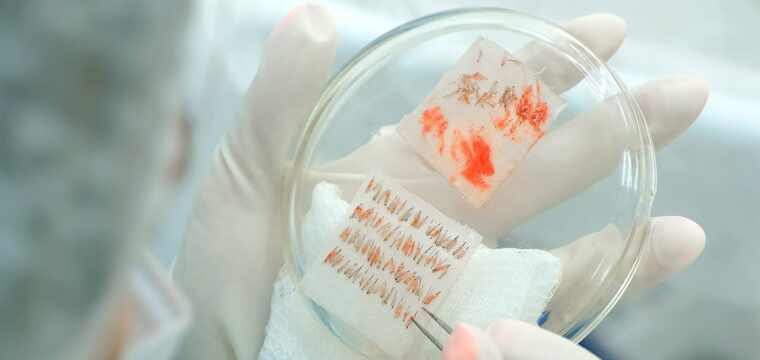
A graft is a small unit of tissue containing one or more hair follicles extracted from the donor area and transplanted into thinning or balding zones. Each graft typically contains 1- 4 hairs and the way those grafts are distributed plays a significant role in how natural and full the final result looks.
- Single-hair grafts are used along the hairline, where a natural, soft edge is important
- Multi-hair grafts are placed in density zones further back, where fuller coverage is the priority
The art of a good hair transplant lies not just in how many grafts are used, but in how they are selected, handled and placed.

The number of grafts you need depends on the extent of your hair loss and can range from 1,000 to 5,000 or more.
How Many Grafts Do You Need for a Hair Transplant?
The number of grafts needed depends on the extent of your hair loss and the level of coverage you’re hoping to achieve. As a general guide:
Mild hair loss: 1,000 to 1,500 grafts
Moderate hair loss: 2,000 to 3,000 grafts
Advanced hair loss: 3,500 to 5,000 or more
These are starting points rather than fixed rules. The only accurate way to determine your graft requirement is through a detailed assessment with Dr. Malay Mehta.
The number of grafts required can also be dependent on the area.
| Area | Typical Grafts Needed |
|---|---|
| Hairline | 800 – 1,500 |
| Temples | 500 – 1,000 |
| Crown | 1,000 – 2,500 |
| Full coverage | 3,000 – 5,000+ |
How Hair Density Is Calculated
Hair density in transplantation is measured in grafts per square centimetre. A healthy, untouched scalp naturally contains around 80 to 100 follicular units per cm², a level that is difficult to fully replicate in a single surgical session. Rather than aiming for a like-for-like restoration, the goal is to place enough grafts to create a convincing appearance of fullness.
In practice, most procedures aim for a transplant density of around 30 to 50 grafts per cm². This is enough to create the visual appearance of fullness, particularly when the grafts are placed with precision and the hairline is well designed.
Hair Transplant for Density vs Coverage
Density and coverage are related but distinct and understanding the difference helps set the right expectations for your procedure.
| Goal | Focus | Graft Strategy |
|---|---|---|
| Coverage | Fill visibly bald areas | Spread grafts evenly across the zone |
| Density | Create a thicker appearance | Pack grafts more closely in targeted areas |
Some patients prioritise coverage first and address density in a later session. Others focus on a specific area where they want maximum fullness. Dr. Mehta will help you determine which approach is most appropriate based on your available donor supply and your aesthetic priorities.

The maximum number of grafts in a hair transplant is typically between 3,000 and 4,000 grafts per session.
Maximum Grafts in a Hair Transplant
For most patients, a single session can safely accommodate between 3,000 and 4,000 grafts. In certain cases, larger procedures (also known as mega sessions) can involve 5,000 or more grafts, though this depends heavily on individual factors such as donor area size, scalp condition and overall health. Mega sessions are not appropriate for everyone and should only be considered following a thorough assessment with an experienced surgeon.
Factors that influence how many grafts can be safely extracted in one sitting include the size and density of your donor area and the technique used.
Important: Overharvesting can permanently damage the donor area, leaving it visibly thin or patchy. A conservative, long-term approach to donor management is always preferable to extracting the maximum possible number of grafts in a single session.
How Many Grafts Survive After a Hair Transplant?
Under good conditions, transplanted grafts have a survival rate of 85-95%. The factors that influence this include:
- The surgeon’s skill in extraction and placement
- Careful graft handling to minimise time outside the body and reduce trauma during
processing - Patient aftercare, including following post-operative instructions closely and protecting the scalp during early recovery
Graft survival is one of the most important quality indicators of any transplant and it is directly affected by the expertise of the team performing the procedure.
Can You Increase Density Over Multiple Sessions?
Yes, and for many patients, this is the most effective strategy. Rather than attempting to place the maximum number of grafts in a single session, a staged approach allows the surgeon to strategically layer grafts over time, gradually building density while preserving the donor area for future use.
This approach requires careful long-term planning. Every graft extracted is a permanent withdrawal from a finite supply, so decisions made in the first session will affect what’s possible in subsequent ones. Working with a surgeon who takes a considered, long-term view of your donor management is essential.
Realistic Density Expectations
One of the most important things to understand before any hair transplant is that the goal is not a full restoration to pre-loss density, but rather an appearance of fullness. Around half of your natural follicular density is often enough to create a convincingly full appearance in most lighting conditions and hairstyles. The eye perceives volume, which means precise placement can go a long way.
Hairline design matters more than graft count
A well-designed hairline has a greater impact on the overall appearance of the result than the number of grafts used.
Styling and aftercare enhances the result
How you care for your hair after the procedure and how you style it can significantly enhance perceived density. Small adjustments to cut, texture and product use can make a difference to how full the result appears day to day.
Want Fuller, Denser Hair? Here’s How Dr. Malay Mehta Can Help
At Dr. Malay Mehta’s Hair Transplant Clinic in Mumbai, our approach combines medical expertise with advanced technology to help patients achieve their desired hair density. Whether you’re looking to restore coverage, build fullness or refine a previous result, our team is here to assist.
Our treatment options include:
FUE Hair Transplant
A precise, minimally invasive technique that carefully extracts and relocates healthy follicles into areas of thinning or loss, producing natural-looking density without scarring.
Biofibre Hair Implants
Designed for patients with insufficient donor hair, this treatment uses biocompatible synthetic fibres to create an immediate improvement in volume and coverage.
ARTAS Robotic Hair Transplant
An advanced, AI-guided system that enhances the accuracy of follicle extraction and placement, ensuring consistent results and minimal disruption to surrounding hair.
Mesotherapy
A targeted, non-surgical treatment that introduces vitamins and growth factors directly into the scalp, nourishing follicles and creating a healthier environment for hair growth.
Other Hair Loss Treatments
Dr. Mehta’s clinic also offers advanced solutions such as Growth Factor Concentrate Therapy, Low-Level Laser Therapy (LLLT) and scalp micropigmentation (SMP). Each of these treatments can be used independently or as part of a broader plan to improve density, encourage growth and support long-term scalp health.
How to contact us
Phone: +91 7045291747
Another Phone: +91 8758691345
Email Us: drmalaymehta@gmail.com
6th Floor, Cosmos Court,
Vile Parle West Mumbai – 400056
Maharashtra, India
FAQs
How many grafts are required for density?
The number of grafts needed to achieve density depends on the area being treated and your individual hair characteristics. As a general guide, most density-focused procedures require between 2,000 and 4,000 grafts, though this varies significantly from patient to patient. Thicker, curlier hair tends to provide more coverage per graft, meaning fewer may be needed to achieve a satisfying result. A detailed assessment with your surgeon is the only accurate way to determine your specific requirements.
Can you increase hair density through a hair transplant?
Yes. A hair transplant can meaningfully increase density in thinning or balding areas by redistributing healthy follicles from the donor zone into areas where hair has been lost. While it isn’t possible to fully replicate your original natural density in a single session, a well-planned procedure can create a convincing appearance of fullness. For patients looking to build density progressively, a staged approach across multiple sessions is also an option.
When does density really kick in for a hair transplant?
Most patients begin to see noticeable density improvements from around the four to six month mark, as transplanted follicles enter the active growth phase. However, the full result typically isn’t visible until 9 to 12 months after the procedure, when hair has grown sufficiently in length and thickness to reflect the true density achieved. Some patients continue to see gradual improvements for up to 18 months.
How many grafts can be transplanted in one session?
For most patients, the safe maximum in a single session is between 3,000 and 4,000 grafts. In some larger mega sessions, transplanting up to 5,000 grafts or more are possible, though these depend heavily on the size and density of the donor area and are not suitable for everyone. It’s worth noting that extracting the maximum number of grafts in a single sitting isn’t always the best strategy. A conservative approach that preserves donor supply for future sessions often delivers better long-term outcomes.

About The Author
Dr Malay Mehta
Dr Malay Mehta is passionate about offering men the confidence the've always wanted by performing hair transplants with outstanding hair density and natural looking results. He is known as the best hair transplant surgeon in Mumbai delivering amazing results at the most affordable prices in the area.
Most Popular Posts

15 January 2023

5 January 2024

15 February 2023
What is the Cost and Success of PRP Hair Treatment in India?

21 December 2023

15 December 2021








 Online Marketing For Doctors

Comments